

Services List
Hip Joint Replacement Surgeon
Invasive Surgery for Fractures
Knee Joint Replacement Surgeon
Complex Trauma and Fracture Management
Arthroscopic ACL Reconstruction
Invasive Spine Fracture Fixation
Orthobiologics/Stem Cell Therapy
What is arthroscopic ACL reconstruction?
The anterior cruciate ligament (ACL) can be repaired surgically by arthroscopic surgery in an ACL reconstruction operation. One of the crucial knee ligaments, the ACL, provides stability by limiting the excessive forward movement of tibia (the shin bone) in relation to the femur, the thighbone
What is arthroscopic ACL reconstruction?
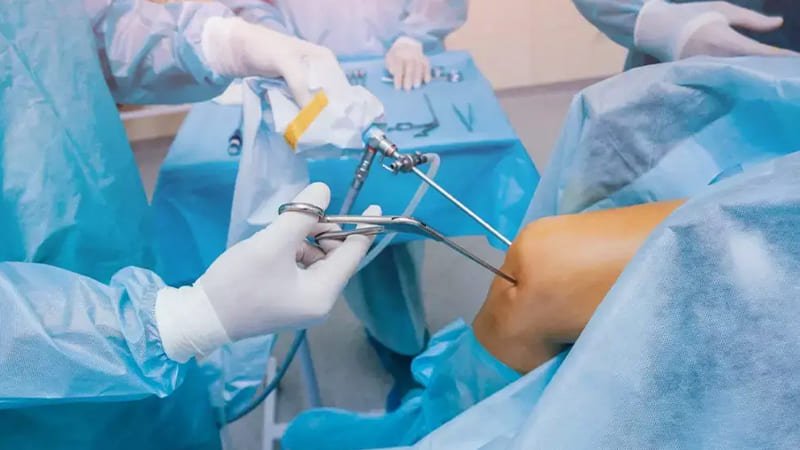
The anterior cruciate ligament (ACL) can be repaired surgically by arthroscopic surgery in an ACL reconstruction operation. One of the crucial knee ligaments, the ACL, provides stability by limiting the excessive forward movement of tibia (the shin bone) in relation to the femur, the thighbone. Small incisions are made in the knee during an arthroscopic ACL replacement in order to insert specialized surgical instruments and an arthroscope, a tiny camera. Using an arthroscope to observe inside the knee joint on a monitor, the surgeon guides the process. To replace the injured ACL, a graft made mostly of the patient’s own tissue is utilized. Auto grafts from the quadriceps, hamstring tendons, and other common sources. A number of variables, including the patient’s age, degree of activity, and the surgeon’s preference, influence the graft selection. A section of the tendon is removed by the surgeon in order to shape the graft to match the original ACL. After that, the graft is inserted into the tibia and femur’s bone tunnels and fastened there with screws, buttons, or other fixation tools. The graft eventually becomes a new ACL, uniting with the bone to stabilize the knee joint.
Reasons for ACL injury:
- Sports involving twisting or overextending the knee is the most common causes of ACL injuries. There are various ways that an ACL might get hurt:
- Abrupt shift in orientation
- Minimizing speed when jogging
- Faulty landing after a leap
- Direct hit to the side of the knee, like in a football tackle.
When is arthroscopic ACL reconstruction suggested?

Identification of a ACL Tear
Severity: When there is a complete ACL tear that does not heal on its own, arthroscopic ACL restoration is usually advised. Depending on the extent and degree of activity of the patient, conservative measures like bracing and physical therapy may be used to treat partial tears.

The ineffectiveness of conservative therapies
Non-Surgical Management: Bracing, physical therapy, and rest are common initial treatments for partial ACL injuries. Surgical reconstruction may be required if these conservative measures are unable to relieve symptoms or restore knee stability.

An active lifestyle or participation in sports
Performance Requirements: Arthroscopic ACL reconstruction is frequently advised for those who want to resume high-impact sports or activities that call for knee stability, such as basketball, skiing, or soccer. The purpose of this approach is to facilitate a successful and safe return to these activities.

Chronic instability in the knee
Functional Impairment: Surgery may be necessary to enhance knee function and stability if conservative treatment is ineffective or if the instability interferes with day-to-day activities and quality of life.
Post-surgery Rehabilitation
Rehabilitation begins immediately after surgery. A physiotherapist will guide you through ligament specific protocol exercises to strengthen the leg and restore knee movement. However, the ACL graft typically takes up to six months to fully incorporate. During this period, activities such as cutting, sprinting, and jumping should be avoided.